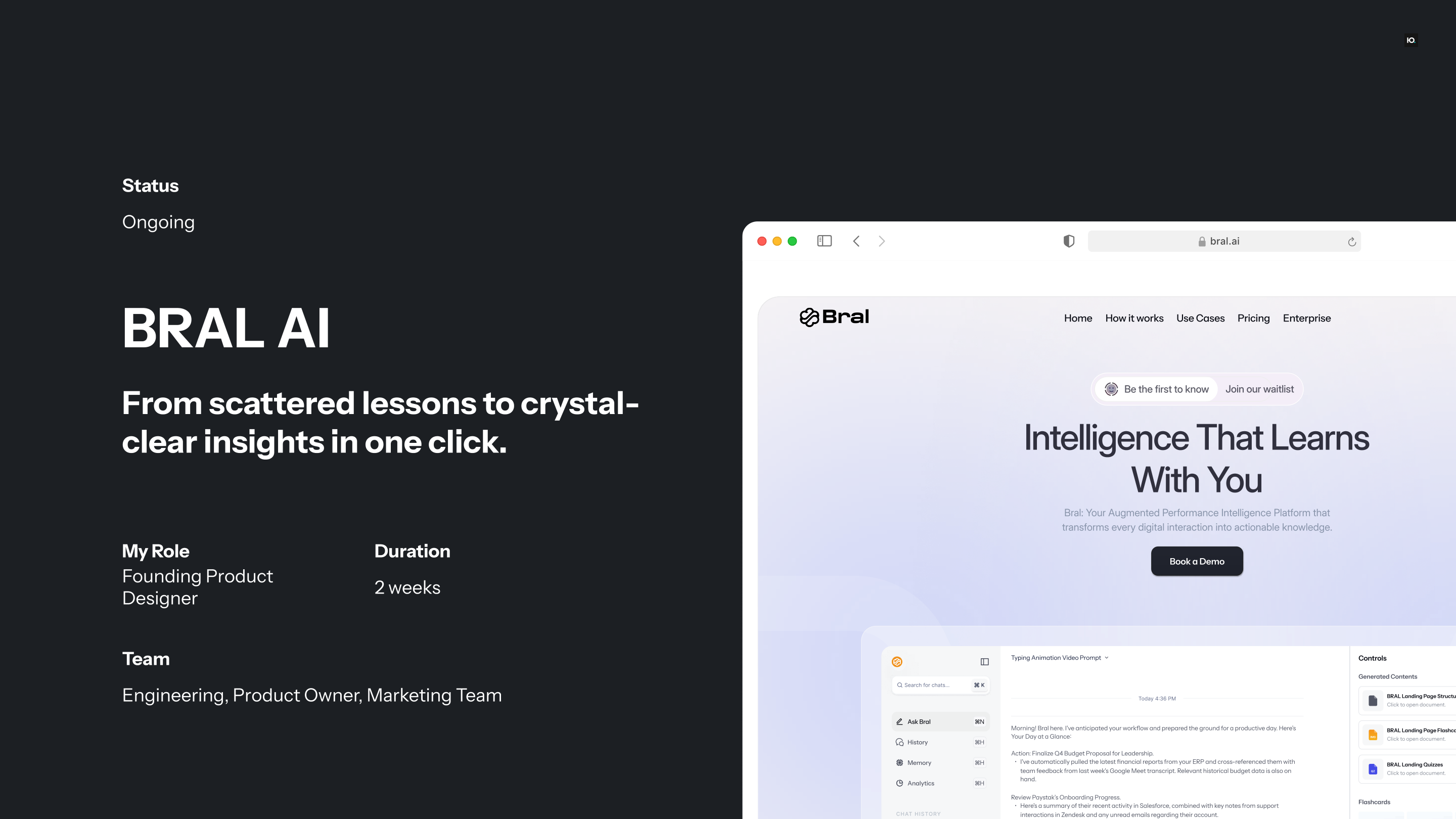
Starting from zero
BRAL is an AI learning and knowledge companion built to unify fragmented inputs — courses, meetings, documents, daily work tasks — into one contextual knowledge system. I joined as founding product designer with no prior wireframes, no design system, and no established product thinking. My mandate was to take the concept from idea to a real, usable product: define the experience structure, design the core features, and build the foundation the engineering team could build from.
Why generic AI fell short
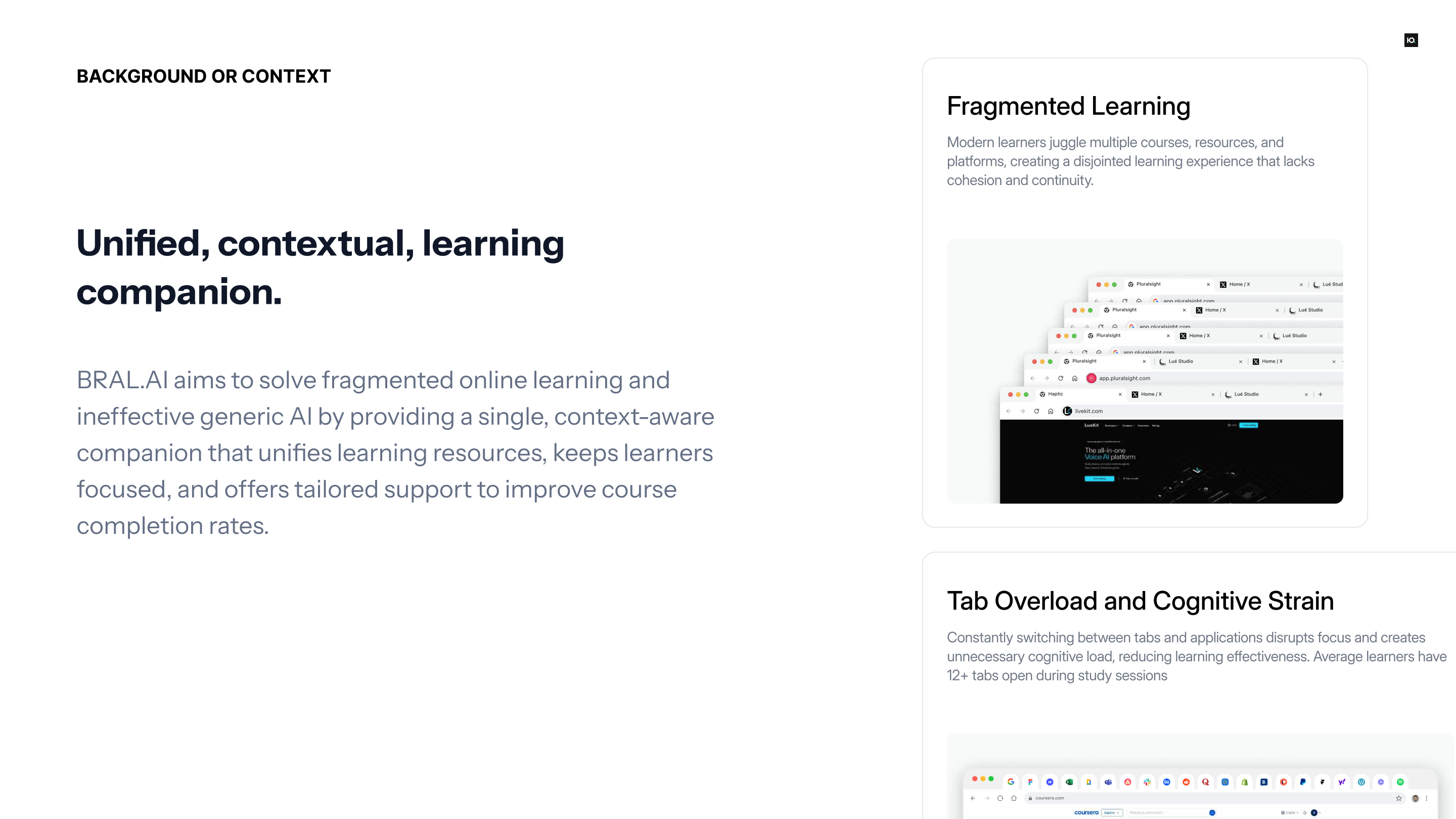
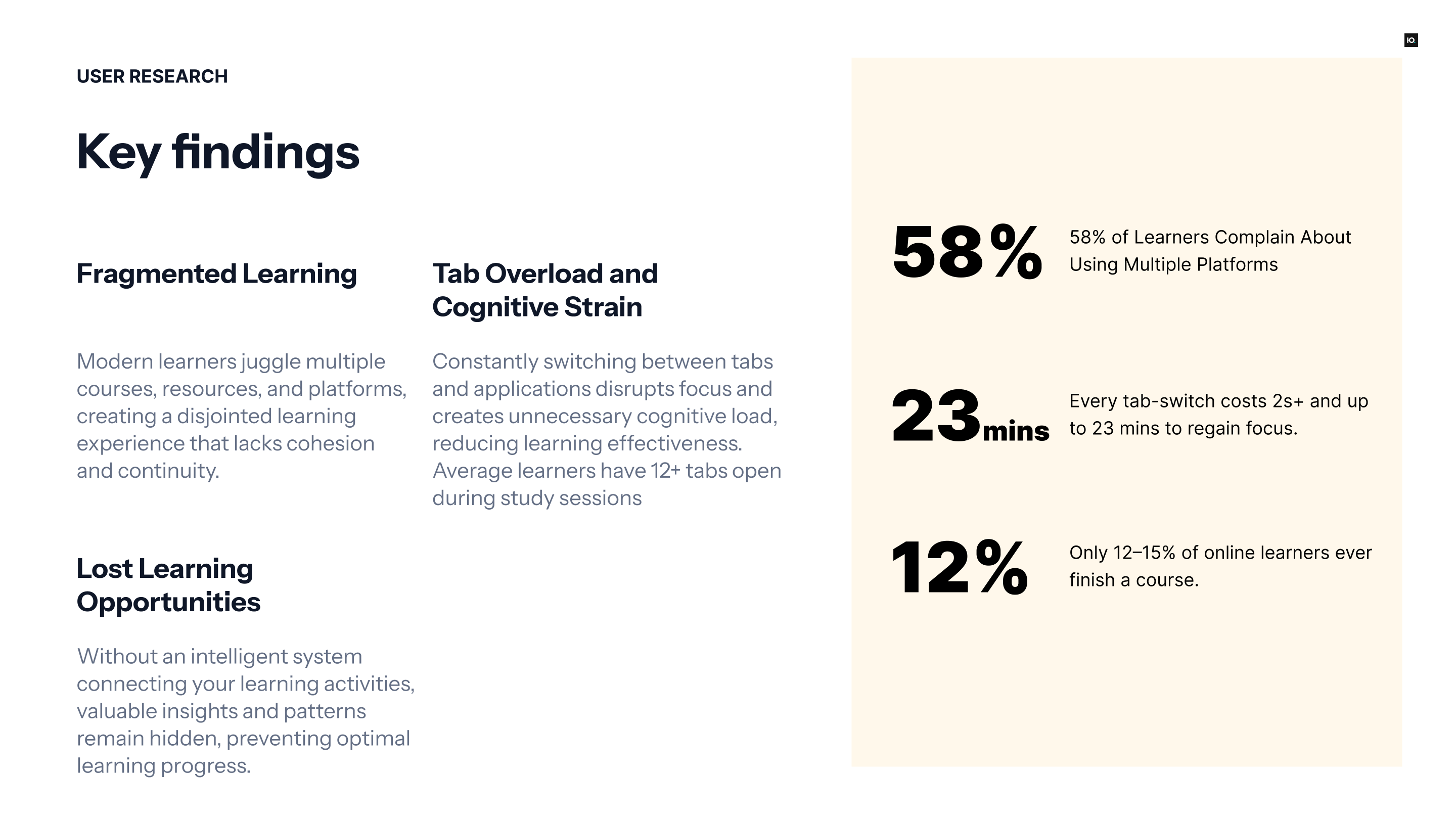
Knowledge workers and learners lose an enormous amount of time to fragmentation: switching between tabs, re-explaining context to generic AI tools, and failing to retain information from courses and meetings they have already sat through. Existing AI products respond in isolation — without memory, without understanding the user's context, and without producing outputs that are actually useful downstream. The opportunity was to design something fundamentally different: an AI that learns alongside you rather than just answering questions.
Designing for context
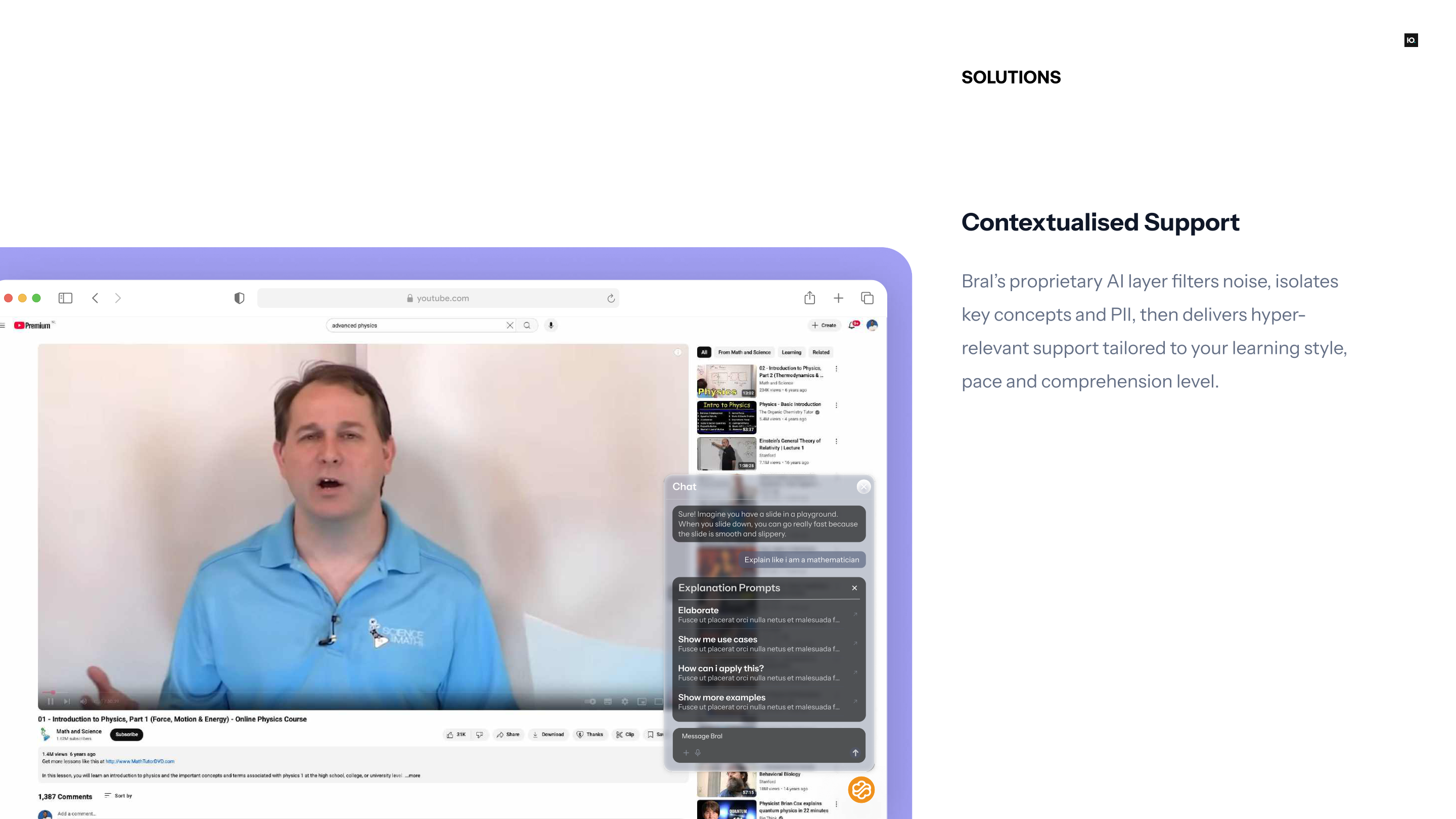
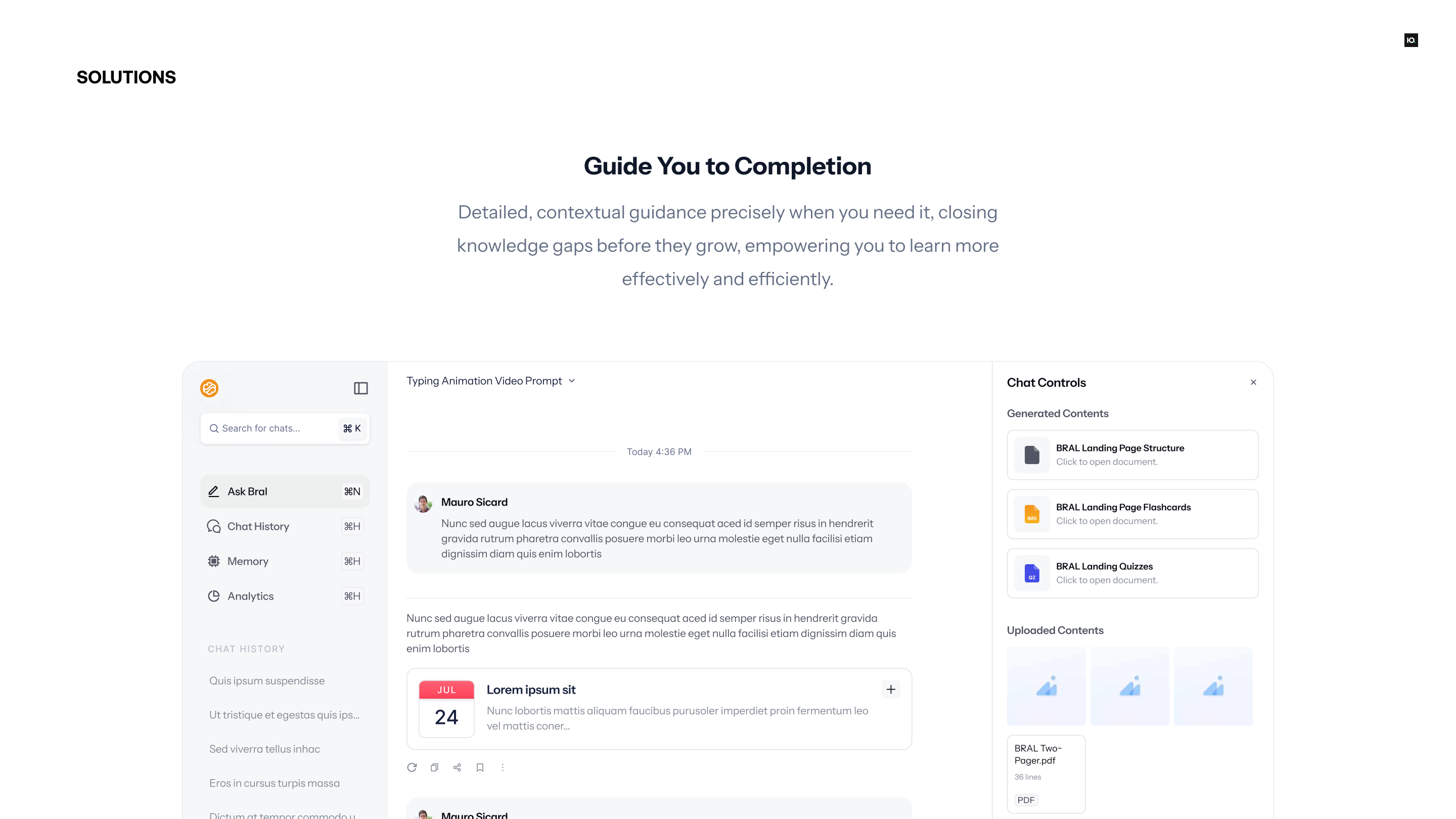
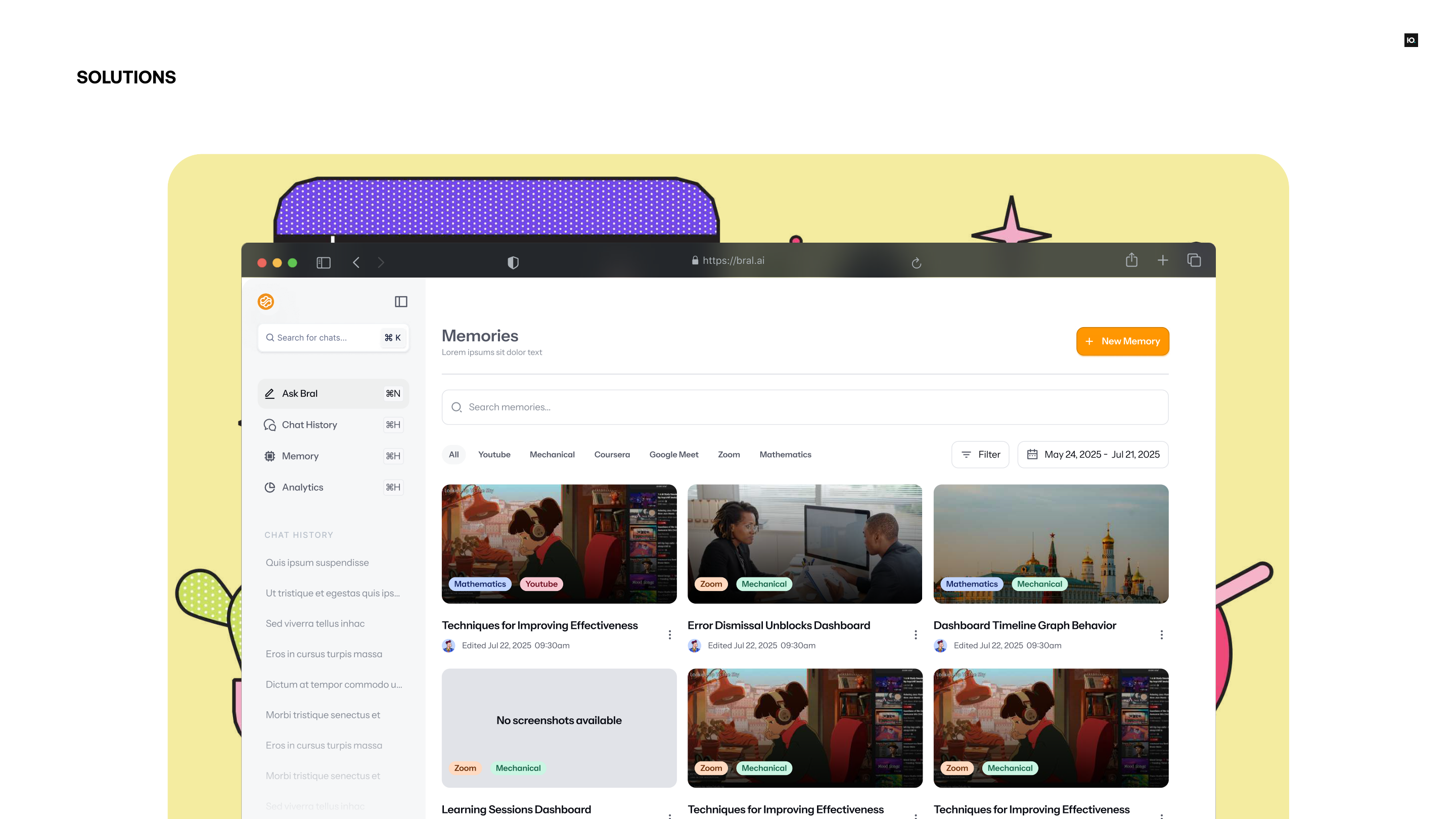
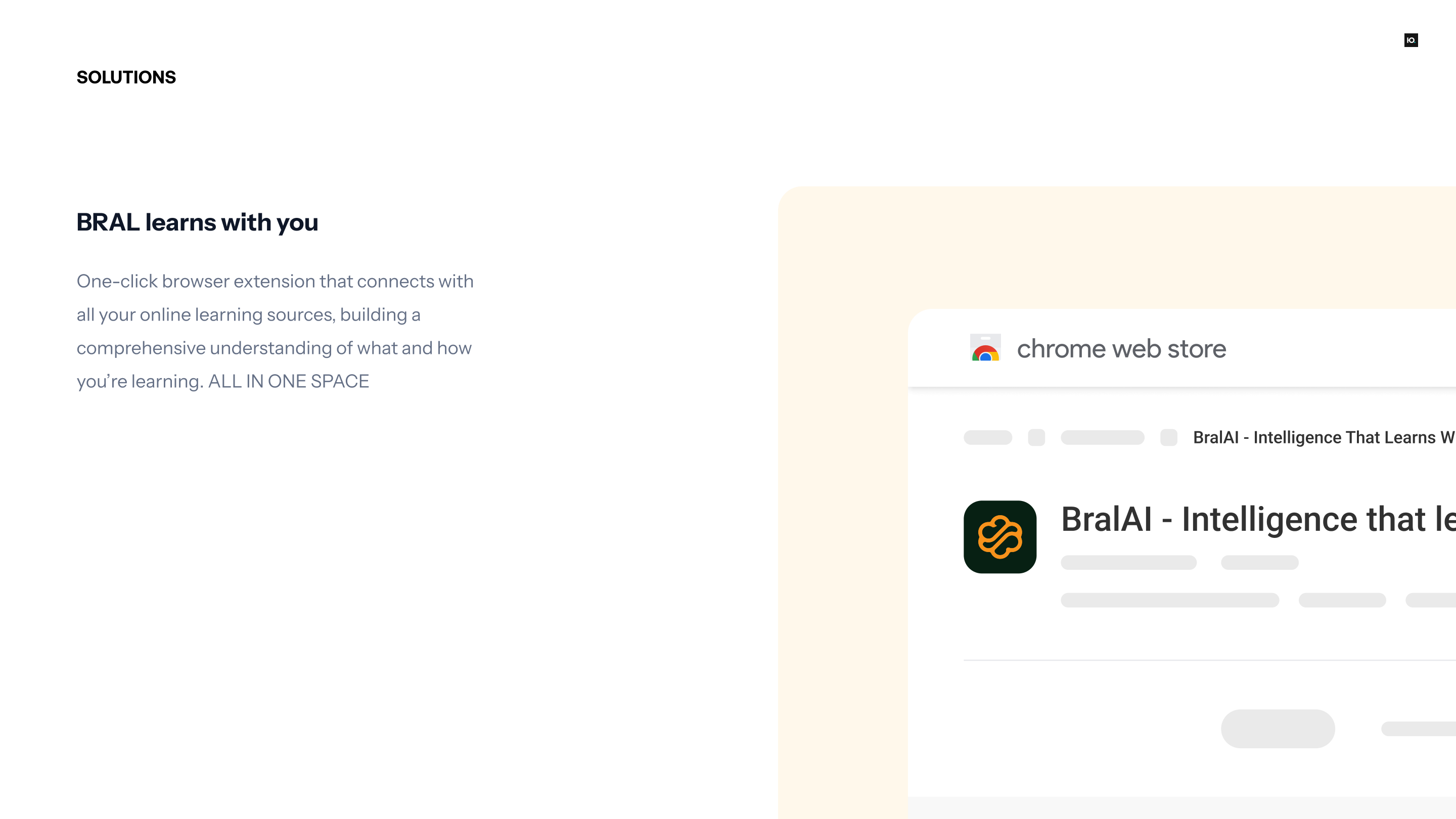
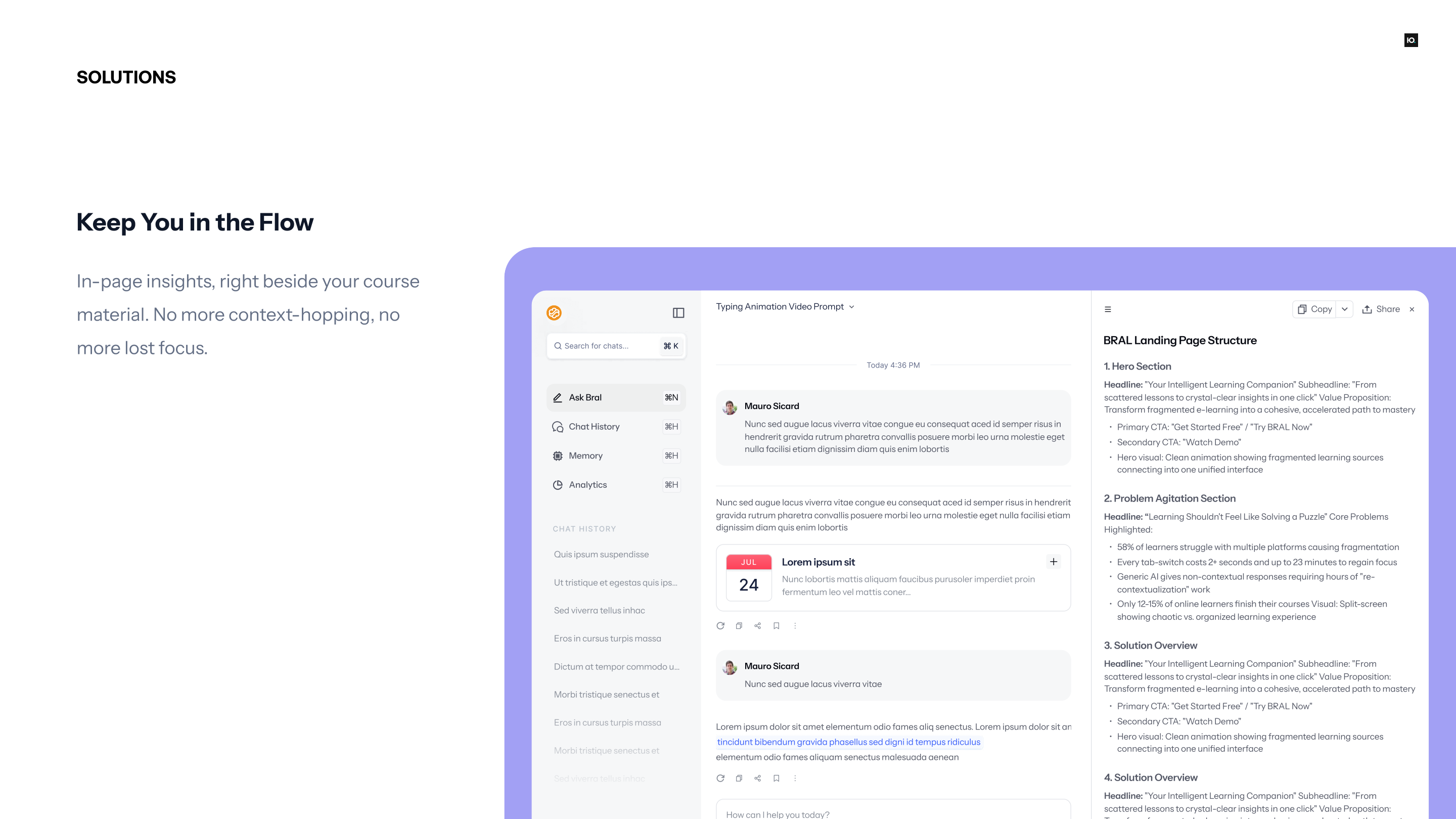
I designed BRAL around five core capabilities — knowledge capture, contextual memory, AI-assisted chat, learning analytics, and generated outputs (flashcards, quizzes, summaries, study plans). Rather than building another chat interface with AI bolted on, I structured the product so the AI layer had access to the user's actual context: what they had captured, what they had learned, what they were working on. Every surface was designed to make contextual support feel natural rather than novel. I also built a scalable visual and interaction system from the ground up, so the product could grow without losing coherence.
Building the system
I worked from product definition through system design, using fast founding-team feedback loops to keep the idea coherent as it became a buildable product.
- Audited the landscape of AI tools, learning platforms, and knowledge management products to define where BRAL could be genuinely different rather than derivative.
- Worked with the founding team to define the five-capability product structure — separating it clearly from the note-taking, flashcard, and generic AI categories it might otherwise blur into.
- Mapped the core user journeys for both student and knowledge-worker use cases to identify where the AI layer needed to do the most work.
- Designed context-aware AI flows where the assistant draws on what the user has captured and studied — not just the current message — making responses more relevant and decisions easier.
- Built a Figma design system from zero, establishing component logic, token naming, and documentation standards before any screen-level design was shared with engineering.
- Ran fast design-and-feedback cycles with the founding team to validate the product direction before investing in detailed UI production.
A product foundation
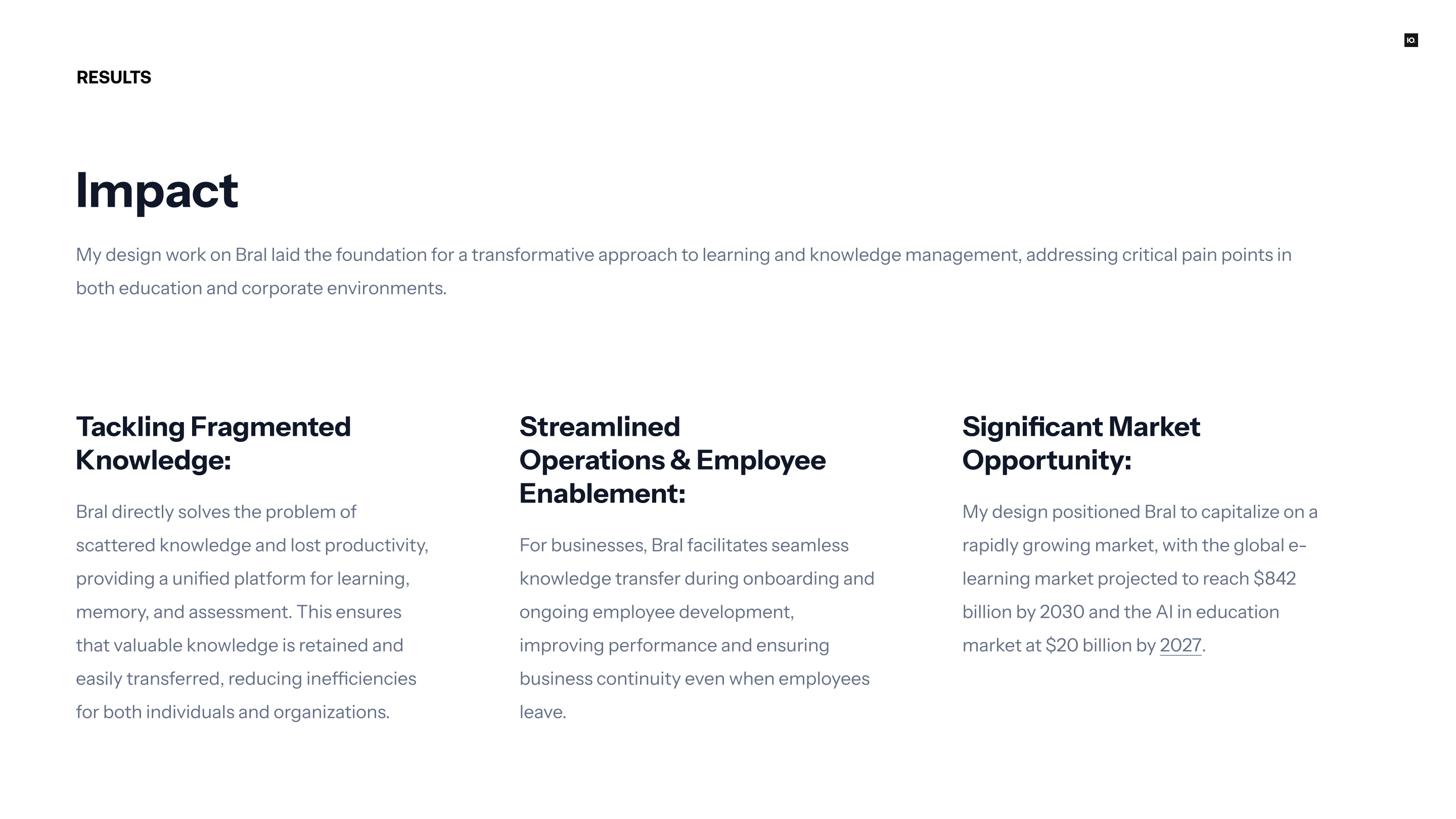
BRAL moved from concept to a coherent, fully designed product with a clear value proposition, a working design system, and five production-ready feature areas. The product now communicates a distinctive AI positioning — contextual intelligence rather than generic assistance — that gives it a real story to tell to both users and investors. As founding designer, I was responsible for every decision that shaped the product's direction, and the result is a product foundation strong enough to build a company on.